Building the Quantum Ecosystem: Government and Academic Outlook
A cross-section of public sector and university quantum science leaders provided respective perspectives on how their organizations are working to build the quantum ecosystem from economic, technological and strategic collaboration points of view, during the INQUIRE Quantum Innovation Symposium held April 22 at Northwestern.
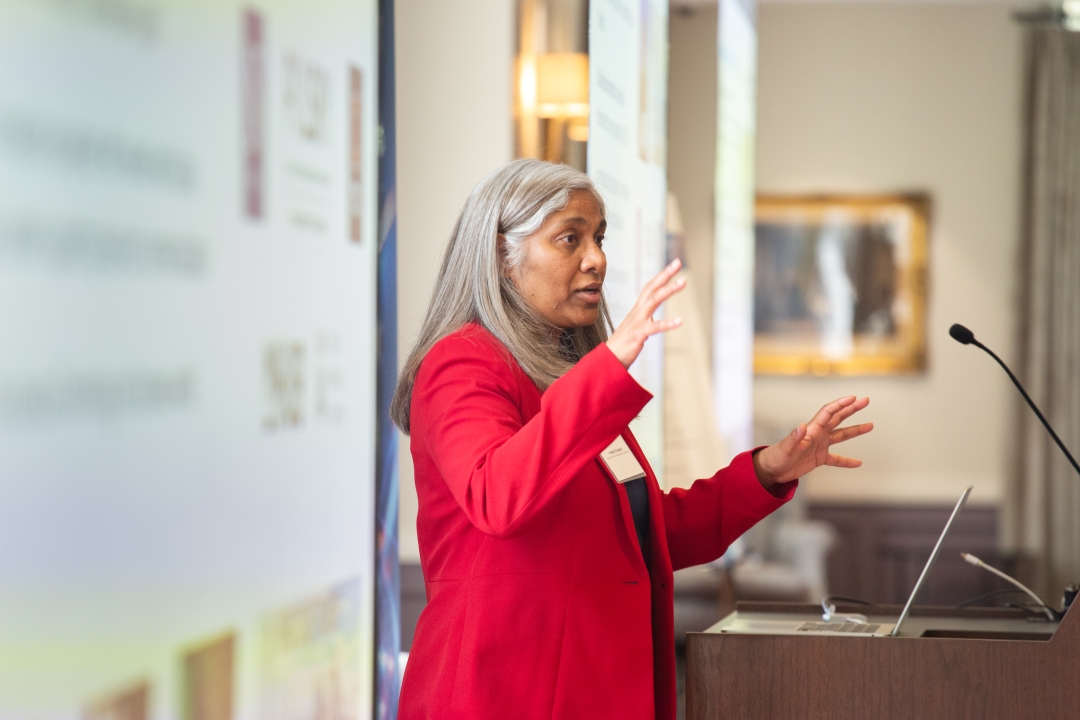
Preeti Chalsani, senior vice president and chief quantum officer at the Illinois Economic Development Corporation, kicked off the day’s proceedings by talking about how the state of Illinois’ business development arm, which works closely with the governor’s office, Department of Commerce and other stakeholders like universities and industry, has aimed to make Illinois a “leader in the global quantum space.”
The state has invested more than $700 million in the sector since 2019, she said, and named quantum, artificial intelligence and microelectronics as one of the six high-priority sectors. Governor JB Pritzker, a Northwestern Pritzker School of Law alum and “VC in his past life,” believes the technology-based economic development is key for the state’s success, in part to change the narrative that the coasts have all the economic action, Chalsani said.
“The quantum ecosystem spans the entire value chain—generation of ideas in labs, all the way to commercialization and end users of technologies,” she said. “It leverages very unique ecosystem catalysts and activates educational, research, commercialization, industrial, civic and government organizations to build … a very deep and broad base for the advancement of the quantum industry, for the benefit of humanity, but also, very importantly, for economic development and growth throughout the region.”
Illinois has foundational assets like Northwestern, University of Chicago, University of Illinois, Argonne National Laboratory and Fermilab, Chalsani said, adding that “quantum is truly multidisciplinary, and it’s really key that we’ve had strengths across fields, from chemistry, engineering, math, physics, etc.” With four of the 10 national quantum research centers funded by the National Quantum Initiative Act located in Illinois, “this type of density doesn’t exist anywhere else.”
Another asset for the Illinois quantum ecosystem is the broad regional industry base. For an emerging technology where the applications are still being identified, it’s important to be close to many different sectors for exploration of use cases,” she added. “We are increasingly seeing VCs seeking out investments in Illinois because that investment leverages the ecosystem in Illinois, and Illinois-based companies are also seeing a lot of mergers-and-acquisitions interest.”
The Illinois Quantum Microelectronics Park (IQMP), under construction on the South Side of Chicago, is putting the city and state on the map for quantum work, she said. “This is a really important asset for our region.”
The federal Defense Advanced Research Projects Agency (DARPA) has invested $140 million into the DARPA-Illinois Quantum Proving Ground Program based at IQMP, which will have infrastructure to support the development of hardware, software, applications and enabling technology, Chalsani said.
Other announced tenants and partners include IBM, PsiQuantum, Infleqtion, Diraq, Quantum Machines, Silicon Catalyst and Pasqal. The National Quantum Algorithm Center (NQAC) which will be housed there “brings together the entire value chain of quantum computing: quantum computing researchers, hardware and software companies as well as end users,” she said.
Indeed, quantum technology is developing rapidly, making it challenging to keep up with the latest paper with the next development, with hardware a continuous source of flux in terms of qubit counts and coherence times, said Laura Schulz, head of quantum innovation at Argonne National Laboratory’s Leadership Computing Facility. The technology itself and the workflows to use them remain immature, while “at the same time, there’s pressure to begin delivering scientific value,” she said. “We’re building the technology, the software and the operational model at the same time. It’s like having to fly an airplane while building it.”
Noise and instability of qubits impact the ability to compute in the current pre-fault-tolerant era of quantum, Schulz said. “Today, extracting knowledge from these systems requires users to understand a great deal of the underlying technology. That creates a barrier for many domain scientists,” she said. “One goal is to move that complexity into software and infrastructure abstractions so researchers can focus on science rather than on details of the hardware.”
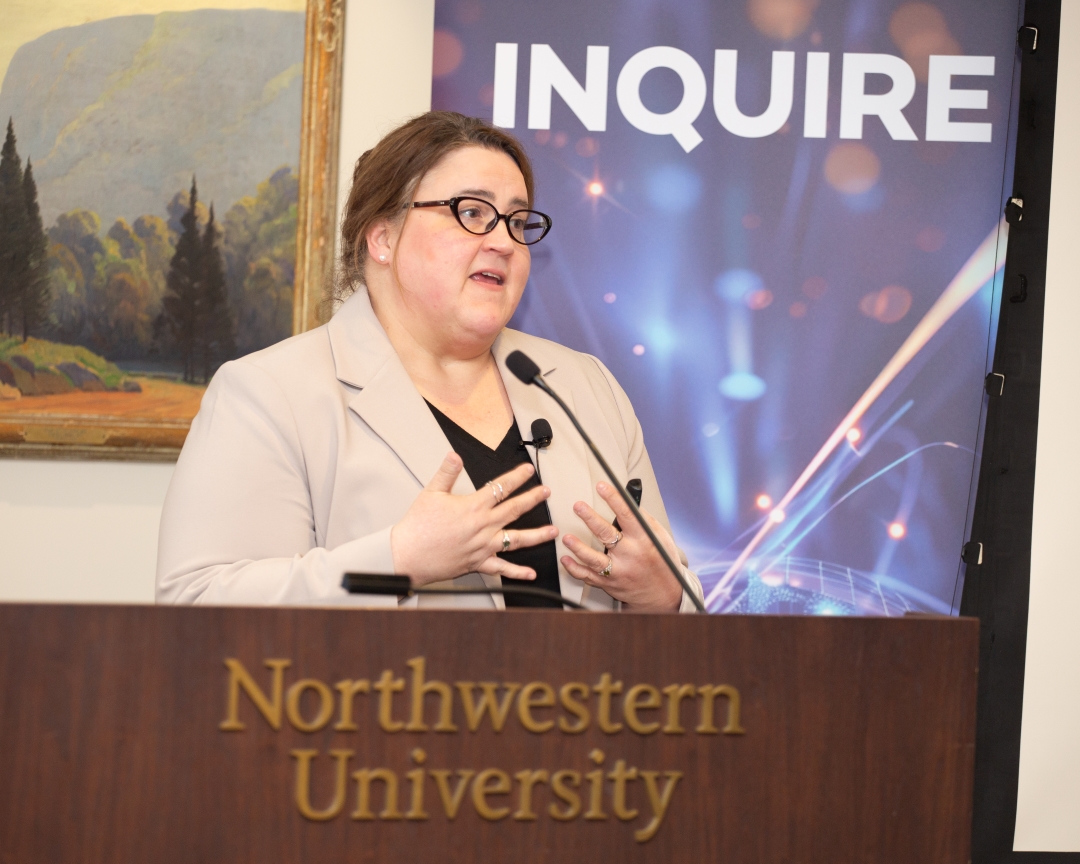
As a government entity and supercomputing center, Argonne needs to ensure that quantum science is nationally competitive, and the organization is helping to build out open source environments for collaboration across sectors, including vendors, Schulz said. “What excites me about this space is the willingness of industry, academia and government to work together,” she said. “Many vendors recognize that building a sustainable market requires more than advancing hardware. It requires integrating quantum into established computing environments.”
Artificial intelligence also will have a role to play as quantum computing continues to mature, Schulz said. “Quantum systems can provide insights that may be difficult or impractical to obtain through classical simulation alone,” she said. “Combined with AI, the two approaches can reinforce one another, from accelerating quantum algorithm development to using quantum-derived data to improve future models."
Nikos Hardavellas, professor of computer science and electrical and computer engineering at Northwestern, echoed what Schulz said about the need to develop larger numbers of qubits, longer coherence times and higher gate fidelities to build useful algorithms. He noted that “hardware alone is called to bridge this very large gap, which is a very hard task to undertake,” and added that “the goal of the type of research that we are doing is to work on the algorithms and software side to accelerate the path to quantum utility.”
Hardavellas drew a parallel with the classical computing systems of the 1950s, which were challenging for non-computer-experts and error-prone. Decades of research and experimentation produced “all of the nice things that happen today with our programming languages, arbitrary number of variables and infinite memory system and complex operations,” he said. Similarly, with 2020s quantum, “It’s really important to do the equivalent research and build those systems with the appropriate software stack and algorithms to help the hardware achieve and realize its full potential. That’s exactly the journey … We’re trying to democratize access to quantum computing for domain scientists.”
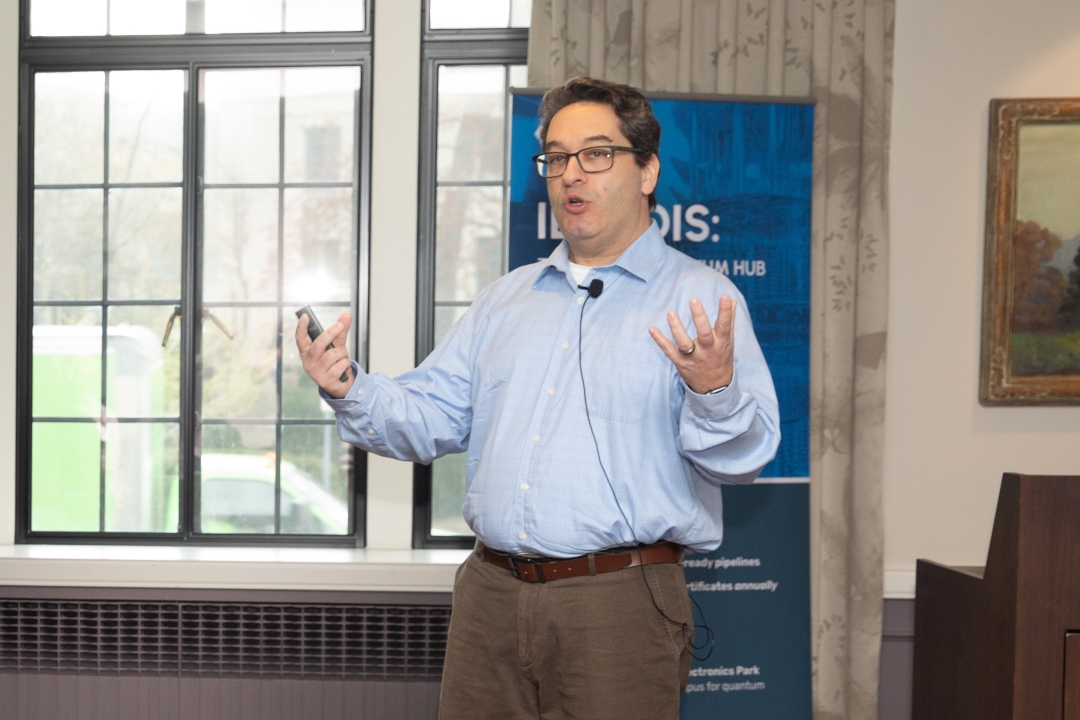
The quantum field needs an “industrial engine” to fund projects and move research, with public, open-source efforts to achieve scalability, Hardavellas said. “I’m a big proponent of open-source software,” he said. “At the same time, I see a need for companies to keep some secrets, especially when they start performing optimizations. … There will be a barrier that a company would probably need to place to be able to protect their intellectual property on the hardware design. But there's a lot of room above that barrier, it seems to me.”
Inder Monga, director of the scientific networking division at Lawrence Berkeley National Laboratory and executive director of the Energy Sciences Network (ESnet), provided details about the effort underway in partnership between Berkeley Lab, University of California, Berkeley, CalTech and the University of Innsbruck to develop the Quantum Application Network Testbed for Novel Entanglement Technology (QUANT-NET).
“The basic concept behind quantum networking is distributing entanglement between disparate nodes. The state from the matter qubits, that are typically used for computing, cannot be transported via free space or fiber,” Monga said. “The photons are called the ‘flying qubits.’ What we are doing in QUANT-NET is entangling photons with the matter qubits, and using fiber to teleport this state to another matter qubit which is part of a different quantum computer, as a building block for distributed quantum computing.”
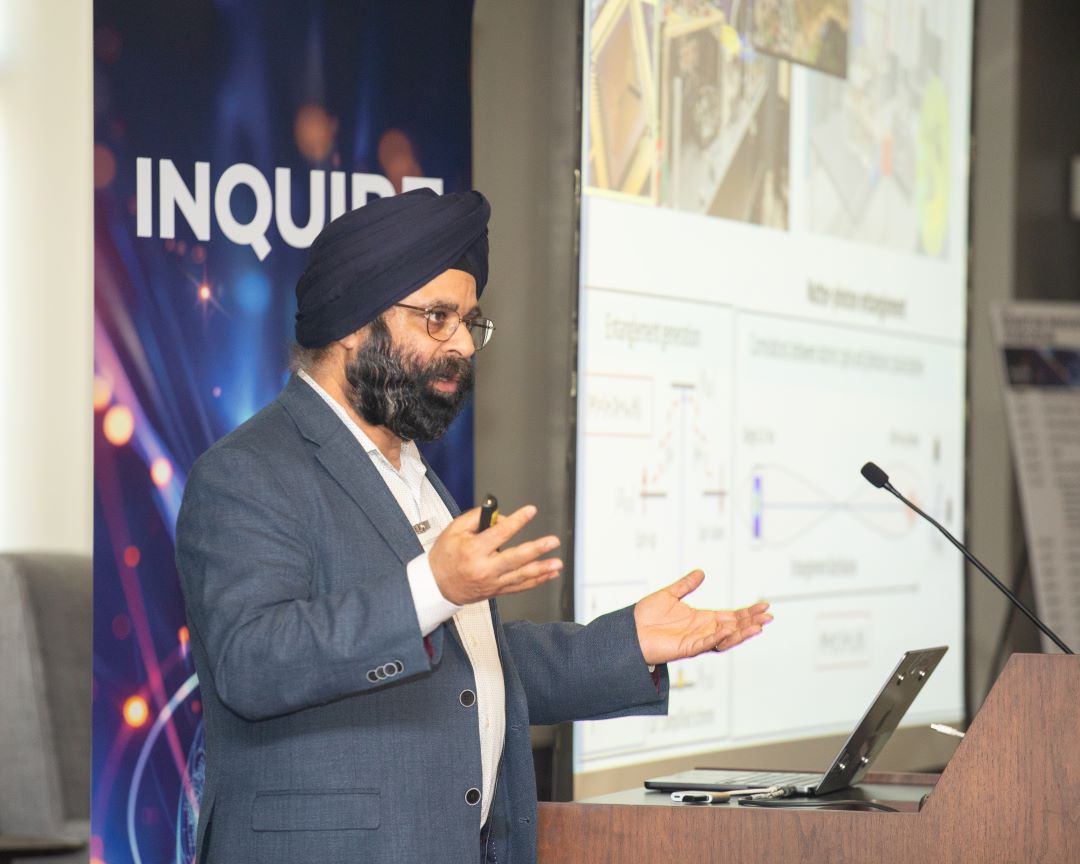
The QUANT-NET project is building a modular quantum computing testbed, an extensible control framework with high-rate, high-fidelity entanglement generation using ion traps, he said. “Because we might want to solve each problem and optimize the system iteratively, we are building a modular system and making it open source, as an opportunity for the quantum networking community to evolve together,” he added.
With about a year left in the project, the primary focus is shifting toward quantum data centers to help build utility-scale quantum computers rather than the nationwide quantum internet, Monga said. His team is examining issues like how a gate compiler can optimize algorithms, integrate those directly with the software stack, stage different quantum nodes, and get the system working autonomously.
“What we have is a distributed qubit compiler built by Cisco, integrating with our open-source software control stack that is able to run multiple simulations—we call it NetQStack,” he said. “In addition, we are looking at resource estimation, but with a different perspective. How many communication qubits do you need in a QPU in order to effectively do distributed quantum computing?”